
Return on Equity, real estate data analytics software

In a recent article, we discussed the use of capitalization rates to estimate the value of a piece of income-producing real estate. Our discussion concerned the relationship among three variables: Capitalization Rate, Present Value and Net Operating Income.

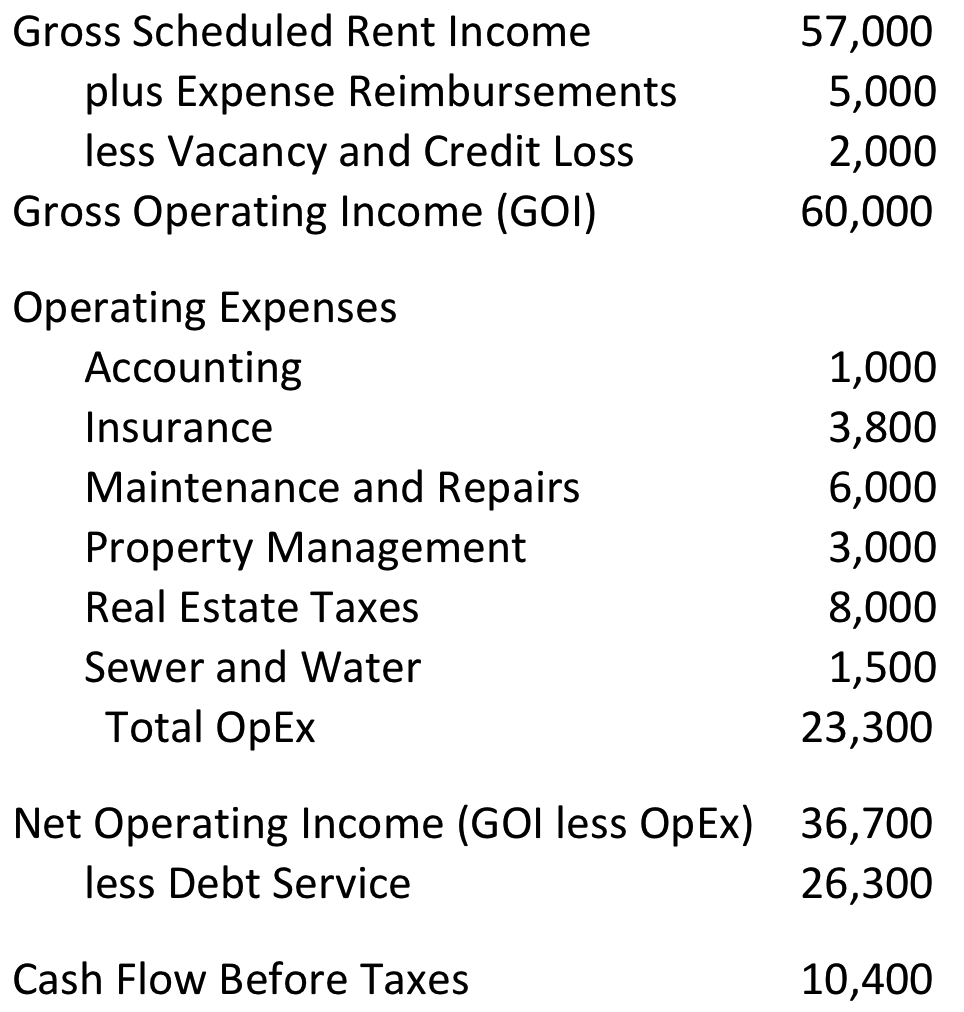
We may have gotten a bit ahead of ourselves, since some of our readers were unclear on the precise meaning of Net Operating Income. NOI, as it is often called, is a concept that is critical to the understanding of investment real estate, so we are going to backtrack a bit and review that subject here.


Whitish mouse

I remembered a day when I was an undergrad psych major at Yale (a day in 1964, if you can believe) when my professor did an experiment in class that stayed with me for all these years.

He had a little mouse and what looked like a Skinner Box – you might remember those from your college years, an enclosure designed to use positive reinforcement – receiving food pellets in a tray – to teach the mouse to perform some action, like pressing a lever.

The prof came into our lecture hall in front of a hundred or more bright-eyed freshman carrying a modified version of the box: It had two separate levers that would each deliver food pellets, and one of the levers was designed to pay off much more frequently than the other.

Real Estate Project Feasibility, real estate investment evaluation software

In an earlier article we discussed the first of two ways that developers traditionally use to look at the feasibility of income-property projects. That one was called the “Back Door” approach. It will come as no surprise to learn that we call the other method the “Front Door” approach. The difference between these two approaches lies in what you consider to be the unknown variable. With the Back Door, you believe you know the rental rate that you can obtain for the space once it is built. You also know the cost of financing your project and what you consider to be an acceptable rate of return on your own equity investment. Blend this all together and what you’re really saying is that you know the revenue stream and want to figure out is the maximum total project cost that you can support with that revenue stream.

Real Estate Project Feasibility, real estate investment evaluation software

You might employ the Back Door approach if you have a use looking for a site. You know what you want to build and can reasonably estimate the kind of rental revenue it can generate. The question for you as the developer is, “Will that revenue be sufficient to justify the cost of development?” Presumably, this technique is called “back door” because you’ll back into the maximum project cost that the use will support. Then, like Hamlet examining Yorick’s skull, you’ll ponder it until you decide if you can actually do the deal. In short, if your intended use will support a project that costs $x and no more, you must decide if you can you develop it for those $x.

Return on Equity, real estate data analytics software

We frequently hear a question that goes something like this: “I’m considering the purchase of an income property where the seller will take back a second mortgage for the entire down payment. Why can’t your software figure out the rate of return on a zero-cash-down investment?” You’ve surely heard the excuse, “It’s not the software’s fault” more times than you care to recall. This time, however, the blame really does not fall upon the software, the hardware, the astronauts, Bill Gates, el niño or any of the other usual suspects.

Return on Equity, real estate data analytics software

Since we released the original version of our Real Estate Investment Analysis software in 1982, our focus has been on pro forma financial analysis of real estate investments and of development properties – projecting the numbers out over time to help users gain a sense of what kind of investment performance they might expect from a particular property or project. And for lo, these many years, our customers (and from time to time, we ourselves) have used the software to help make decisions as to whether or not to buy a property, and at what price and on what terms. Customers have used it to model how things might play out in the worst case, or in the best case, or somewhere in between. They have used it also to compare alternative investment opportunities.

Return on Equity, real estate data analytics software

Not all partnerships include a preferred return but, in those that do, its purpose is to counterbalance the risk associated with investing capital in the deal. Typically, the investor is promised that he or she will get first crack at the partnership’s profit and receive at least a X% return, to the extent that the partnership generates enough cash to pay it. In most partnership structures, the cash flow is allocated first to return the invested capital to all partners. The preferred return is paid next, before the General Partner or Managing Member receives any profit.