~ Real Estate Investment and Development Software since 1981 ~ Log In | Shopping Cart | Check Out
Link to our Articles
Financing Real Estate Investment Property During a Credit Crunch – Five Things You Can Do Now
By Frank Gallinelli


Here’s a news flash: the real estate industry is cyclical, and that’s especially true of the financing portion of the industry. Just as with the stock market, when real estate faces challenges it may also present you with opportunities – but you’re probably going to need the cooperation of a lender to turn those opportunities into deals. What can you do to maximize your chances and how can RealData help you?

1. Get Real Don’t expect to walk into a lender with a tiny down payment and be greeted with open arms and open checkbook. In hard times, lenders become “risk-averse.” One way to diminish their concern is to show that you’re fully invested in the deal, that you are putting your own money on the table. Some of you – especially those who have feasted on a steady diet of get-rich-quick real estate books – surely don’t want to hear this, but don’t expect the lender to take a risk in a tough market if you’re not prepared to do likewise.

2. Check Your Facts In other words, do your due diligence and have it ready to show to the lender (more about that below). Not only should you verify a property’s income by examining its leases, but you should also get an independent take on your local rental market to confirm that the rents are realistic. Visit rentslicer.com as a potential source of apartment rent data. RealtyRates.com should be able to give you info about prevailing capitalization rates in your market. RSMeans' CostWorks can help you with construction costs if this is a development project.

3. Join the Pros Consider joining one of the trade associations for your specialty. There’s NAIOP (National Association of Industrial and Office Properties), ICSC (International Council of Shopping Centers), NAA (National Apartment Association), and ULI (Urban Land Institute) to name just some of the most prominent. Yes there are membership fees, but the data and trends you acquire can be a great help in building a successful strategy. On the “Learn” page at realdata.com, you’ll find that we post featured resources like these to help you succeed.

4. Show Your Stuff With investment property, a lender’s first concern is the viability of the property, but they’re going to be interested in you as well. This is where a detailed personal financial statement comes in – not a bank form that you work on with a pen and a bottle of correction fluid, but a professional looking document in which all the math is right. RealData’s Personal Financial Statement software will do the job for you. Use it to document a one-person or two-person borrower; keep information about all of your accounts, income, assets and liabilities so that it’s ready to update and use whenever to need seek financing.

5. Make Your Case We consider this to be an essential step. You need to build a detailed and professional presentation to show the lender how this property is likely to play out over time. Pretty pictures are nice, but they won’t get you the loan. The lender wants hard financial data and projections, not generalities.

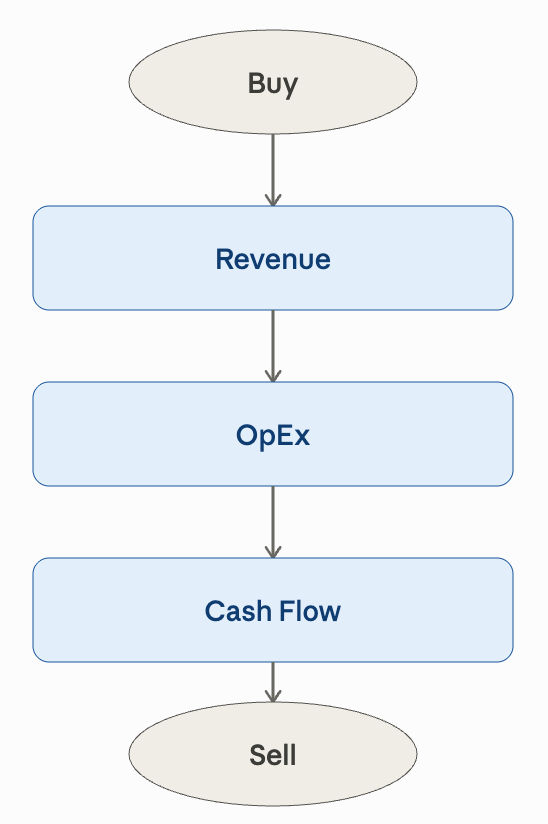
For income-property investments you should project the property’s future cash flow for at least five and as many as twenty years, detailing unit-by-unit income as well as overall vacancy allowance, operating expenses, debt service, improvements, and reserves. And you should use realistic capitalization rates to forecast the future value of the property, based on its net income.

You should provide key metrics that are vital to your lender. First among these is the Debt Coverage Ratio, which every commercial lender wants to see. We’ve discussed this topic in another article on realdata.com as well as in my book, What Every Real Estate Investor Needs to Know About Cash Flow... Also you should show the going-in capitalization rate, and be ready to square that with your due-diligence data about what your market is yielding.

Your lender is less interested in your profit than its own, but it can’t hurt to show the property’s projected IRR or MIRR to establish that you realistically expect to make money and hence will have scant motivation to skip the country.

If you use our Real Estate Investment Analysis software, you won't have to fuss with your calculations and presentation. First run the numbers with the software and make sure the deal really does make sense – cash flow looks good, Debt Coverage Ratio fits the lender’s requirements, etc.

Then approach the lender armed with your reports. But don’t drop a steamer trunked filled with pages of numbers on his or her desk.

If you use our software -- or even if you don't -- start with something like our Executive Summary or Real Estate Business Plan. This will give the lender an overview of the deal. As the dialogue develops, the loan officer or underwriter should ask, “How did you come up with this projection?” or “Where did these numbers come from?” That is when you start pulling out detailed reports to support your projections. You’ll not only answer the questions, but you’ll also demonstrate that you have a firm handle on this deal and you know what you’re talking about.

Of course, not every deal is going to find financing, and that’s true even in non-crunch years. Still, you can stand out from others who are competing for limited funds and maximize your chances of success by using the kind of thorough, professional approach outlined here.

# # #

Watch This Space... Our support desk often receives questions like, “How do I handle this particular issue or this kind of property with your software?” In coming months we’ll be working through examples – the problem, then the solution – right here on our website. If you have an issue you’d like us to address, please let us know. Just open a support ticket at our helpdesk and tell us about it.


Copyright 2008, RealData, Inc. All Rights Reserved

Link to our Articles
~ Creating Real Estate Investment and Development Software since 1981 ~