
~ Real Estate Investment and Development Software since 1981 ~ Log In | Shopping Cart | Check Out
Link to our Articles
Simple Real Estate Investment Software – Simply Wrong?
By Frank Gallinelli

Because we’ve been in the business of producing and selling real estate investment software for more than 20 years, we tend not to get too excited when a new product crowds into our little niche market. Things come, things go, and we’re still here. Recently, however, our radar scope picked up a gaggle of low-priced investment analysis programs. Curious, I decided to take a look at a few of them.

I tried the commercial release of one program and demo versions of three others. I also examined the product specs and sample reports of several more. All were more or less comparable to our Ultra-Lite, which we designed primarily for beginners and students and sell for $99. Three of the programs I tested (like ours) were based on Microsoft Excel and one was a standalone package.

On the positive side, three of the four programs did a good job of presenting data-entry items and the resulting analysis in a way that was fairly easy to follow and understand. Whenever you choose to simplify a complex subject you must also elect to leave out some of the fine points. Each of the programs did so; we did the same in our Ultra-Lite edition.

Because I was looking at products of would-be competitors it should surprise no one to learn that I quickly identified issues in these other programs that I thought were careless or silly or just plain wrong. With one exception, the Excel-based products were basic spreadsheets, harnessing little of Excel’s robust programming power that could have transformed them into professional software packages. They lacked custom menus and toolbars, customized reporting, error trapping and help systems.

These complaints notwithstanding, I would still be the first to agree that content-area knowledge is more important than programming expertise when developing a specialized application like a real estate investment analysis program. You can put up with amateur program design as long as the analysis is correct. But there too I saw obvious shortcomings, such as capital costs masquerading as operating expenses and some not-quite-correct financing calculations.

In addition, all of the programs that attempted to perform a capital gains tax calculation used a simple approach that can lead potentially to an erroneous result. They asked the user, “What is your capital gains tax rate?” As the tax code now stands, the rates currently in effect will remain until the end of 2008 at which time they will revert to the rates that were in effect prior to May 5, 2003. If the purpose of the analysis software is to make pro forma projections into the future then the user needs to know what tax rate will be in effect in the year that he or she actually expects to sell – one entry can’t fit all years because the rates after 2008 are not the same as the rates up through 2008.

The Big Hurt

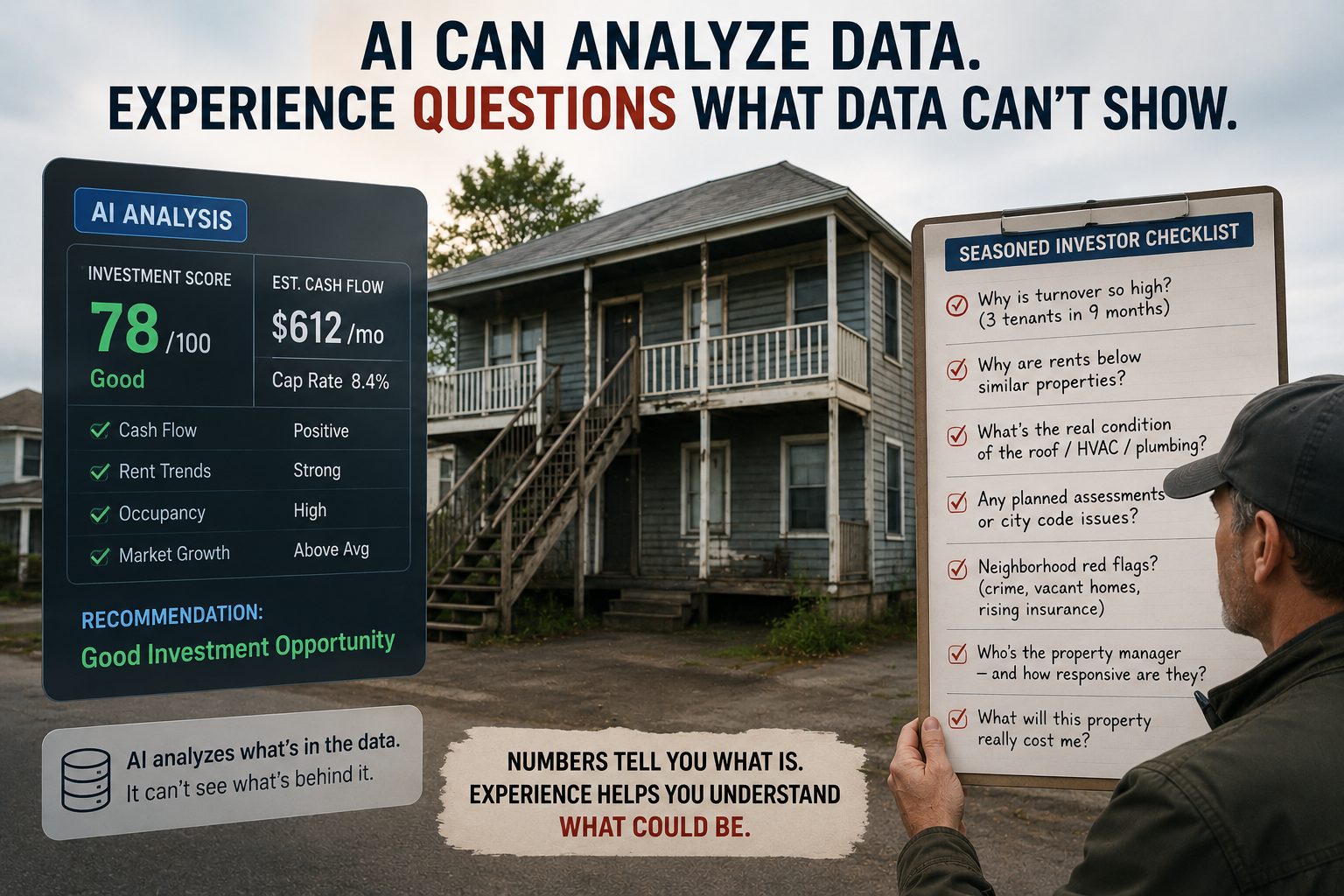
What concerned me the most, however, is that I found all but one of the programs – perhaps in their attempt to achieve a simple, easy-to-use methodology – crossed over into a superficial approach that fundamentally misunderstands the basic nature of income-property investing.

I teach income-property analysis as a guest lecturer in Columbia University’s MS program in real estate development. It distresses me to see tools apparently designed to appeal to novice investors that “teach” one of the most important and fundamental concepts incorrectly.

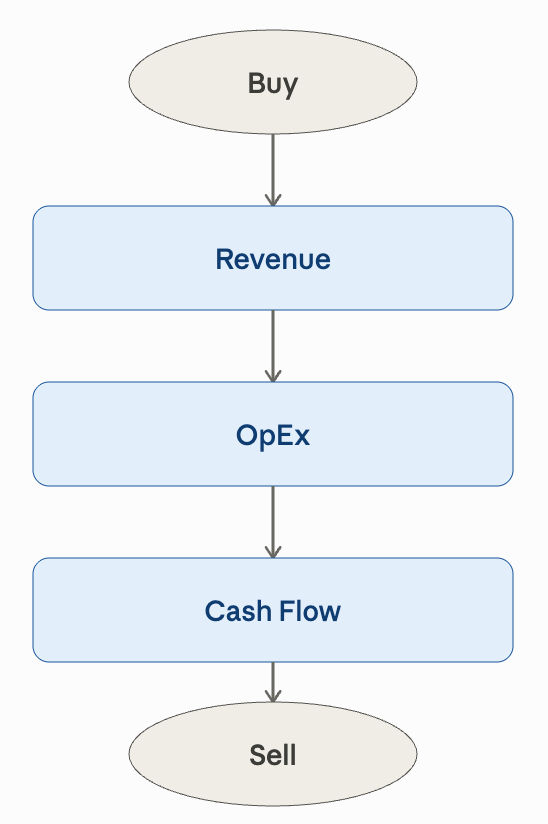
In my class (as well as in my book, What Every Real Estate Investor Need to Know About Cash Flow…, published by McGraw-Hill) I explain that income-property investors do not purchase a pile of bricks and lumber – they purchase an income stream. The value of an income property and the extent to which it is a successful investment is related directly to that income stream.

As I looked at these simple programs, I had a Yogi Berra-style “déjà vu all over again” experience. When I taught the graduate class this fall, several students asked questions about the value of an income property appreciating over time because of general economic conditions. One student volunteered that improving an investment property must surely increase its value.

For those who are accustomed to thinking in terms of the economics of single-family residences, these statements make perfect sense. A rising tide lifts all boats equally. If homes in my neighborhood are appreciating at 10% per year, my home should grow in value at that rate as well.

The valuation of an income property may seem counter-intuitive to anyone who approaches real estate investment with a single-family-home mindset. Income properties can certainly grow in value but (with a quasi-exception I’ll mention below) they do not typically grow according to any “appreciation rate” that can be uniformly applied.

What causes the value of an income property to rise or fall is the enhancement or degradation of its income stream. You can make all the capital improvements you like, but if those improvements do not increase the income stream then they do not increase the property’s value one whit.

The economy may be going like gangbusters, with businesses thriving and home values surging at 20%. But if you own an office building and local developers, in their irrational exuberance, overbuild – thus creating a glut of office space – you may have to lower your rents to attract and keep tenants. You can be surrounded by a great economy but if your property’s income stream is flat or declining, its value is going nowhere. So much for that appreciation rate.

For many real estate investors, the big payday comes in the form of the gain they achieve when they sell their property. That’s why a great part of the importance of a real estate analysis program is to help the owner of a property make a rational estimate of what a new investor would pay to acquire this property in the future. The new investor is not going to care what you paid for the property five years ago or what you paid to improve it since. And he or she is certainly not going to apply an appreciation rate to your original cost in order to determine an amount to offer. That investor is going to look at the income stream thrown off by your property and calculate at what price that income stream represents an acceptable return on investment. Period.

Almost every one of these simple programs used “appreciation rate” as its exclusive method of estimating the subject property’s future market value. And yes, one program even asked if proposed capital improvement should be applied to increase the property’s fair market value. If the users of these programs are buying single-family houses, holding them for rental income and then selling them back into the market once again as personal residences and not as investments, then that approach is acceptable because the properties are not being sold as investments. Likewise, if they are buying an owner-occupied commercial parcel such as a single-tenant retail building, that property may sell for its amenity value rather than its income stream and be subject to “appreciation rate” valuation. But if they are buying typical income properties and planning to sell them as typical income properties, then this approach might be simple and easy to apply but it is fundamentally incorrect. And an analysis that cannot make a supportable estimate of the property’s future resale value also cannot make a meaningful estimate of the property’s internal rate of return.

It’s a worthy goal to try to make a product such as real estate investment software as simple and easy to use as possible. But it is a considerable disservice, especially to novice investors who look to products like this for guidance and instruction, to trade away accuracy and credibility to gain simplicity. Sometimes less really is less.

Link to our Articles
~ Creating Real Estate Investment and Development Software since 1981 ~