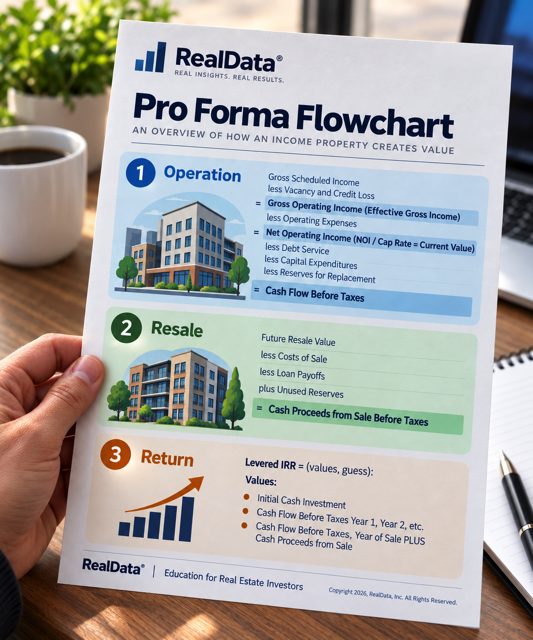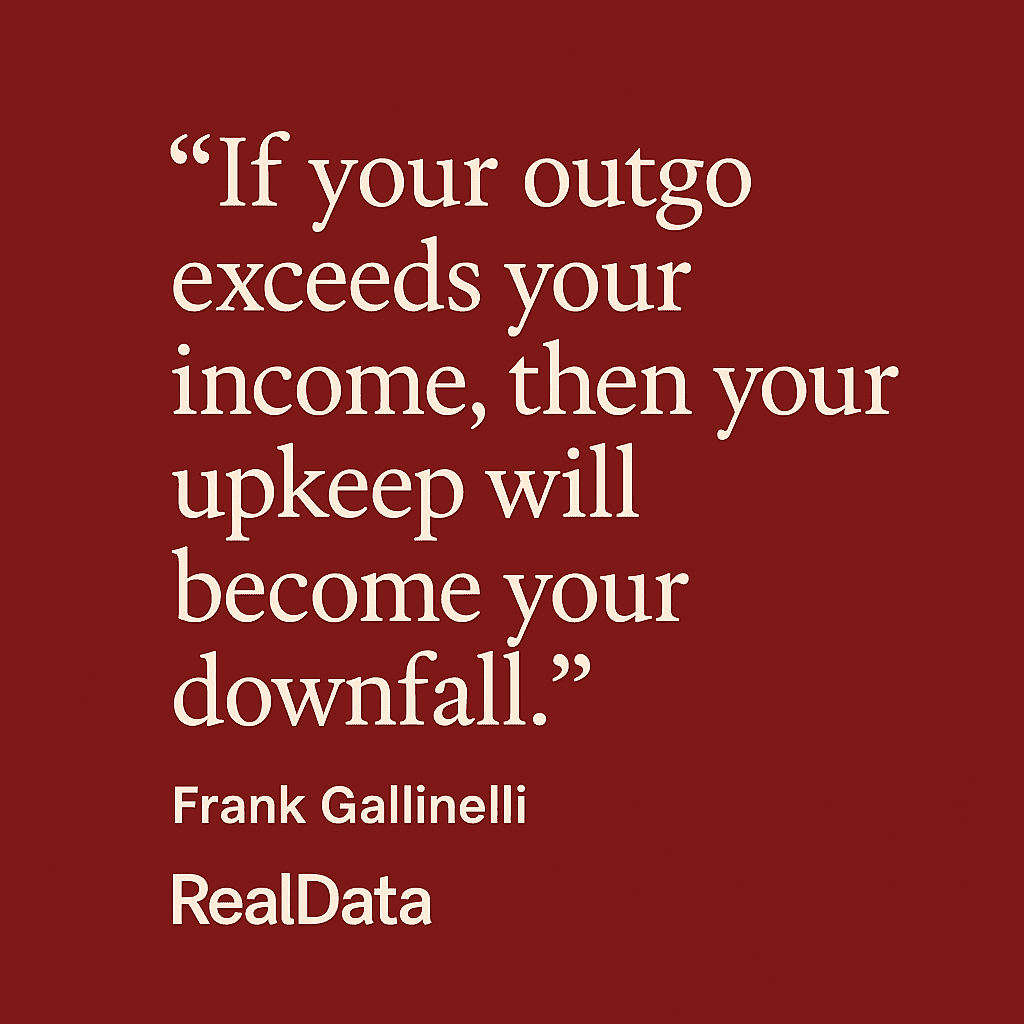

Give AI a properly constructed series of prompts and you get an operating statement you can check, a five-year projection, and an exit price. You also find out which assumption the return depends on, and that is is often not the one the broker is talking about. Here’s how this works on a realistic multifamily deal, a six-unit apartment building, and where the analysis pays for itself.
Category: books
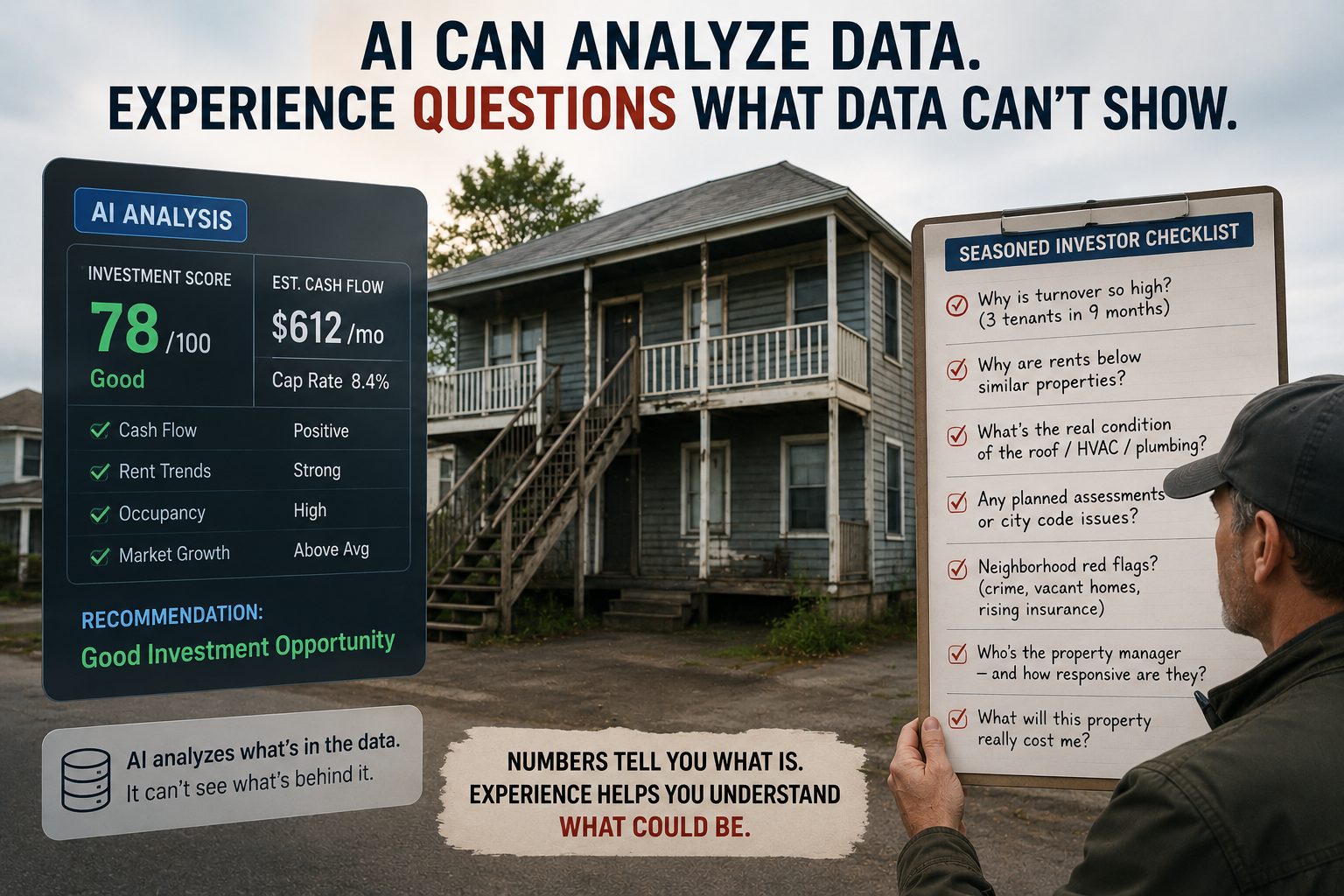
Paste a listing into an AI tool and you’ll get a slick analysis in seconds — cap rate, cash-on-cash, a confident verdict. It might also be wrong in ways that really matter. AI has changed a lot about how we analyze income property. What it hasn’t changed is who wins and who loses.
Those of you who have done a deal or two know that there is no such thing as a single correct price. Maybe a best estimate, maybe a range of possibilities, but certainly not a sure-fire right answer.
I’ll walk you through my approach, step-by-step, to zeroing in on a price that might be acceptable.
I’ve done a good deal of teaching about the process of underwriting real estate investments, particularly income-producing properties. I’ve seen some good approaches and some not so good.
Chances are, if you’re doing a pro forma workup, it’s not just for your own benefit, but also to convey your point of view to a third party. You might be telling the seller or a potential lender, “Here’s what I think is a fair price for this property, and why.”
A few days ago I posted a deal like the ones I give my students and asked what you’d offer.
Those of you who have done a deal or two know that there is no such thing as a single correct price. Maybe a best estimate, maybe a range of possibilities, but certainly not a sure-fire right answer.
I’ll walk you through my approach, step-by-step, to zeroing in on a price that might be acceptable.
Here’s a deal like the ones I give my students to analyze — somewhat simplified, but the real analytical challenge is intact. Curious what you’d pay for this property and how you’d get there.
Fully occupied. Every tenant below market. Anchor lease expires in two years.
What’s your offer?
We hear all the time that users of our RealData investment analysis software are tuned in to any changes in the interest-rate envrionment.
Well… the Fed finally blinked. After two years of hikes that drove borrowing costs through the roof, the central bank cut its policy rate to 4.00%–4.25% in September. Good news, right?
disappeared. In other words: lower Fed rates don’t automatically translate into cheap financing or sky-high property values.
This is a market where “wait for rates to fall and then buy” doesn’t cut it anymore. The smart money is shifting from timing to structuring. Let’s break down what’s really happening—and how real estate investors might choose to play it.
Many of my articles here on RealData Insights have focused on the front end of income property investing — projecting cash flows and weighing the metrics that separate a potentially strong investment from one that falls short. It is easy to get wrapped up in the metrics of this process and to forget that eventually you’ll have to engage in the human and sometimes demanding business of actually managing the property you buy.
How you fulfill that task can go a long way toward determining the financial success of your investment. Property management can be a complex subject, but if you observe some basic principles you can maximize your long-term profit and minimize some of the burden.
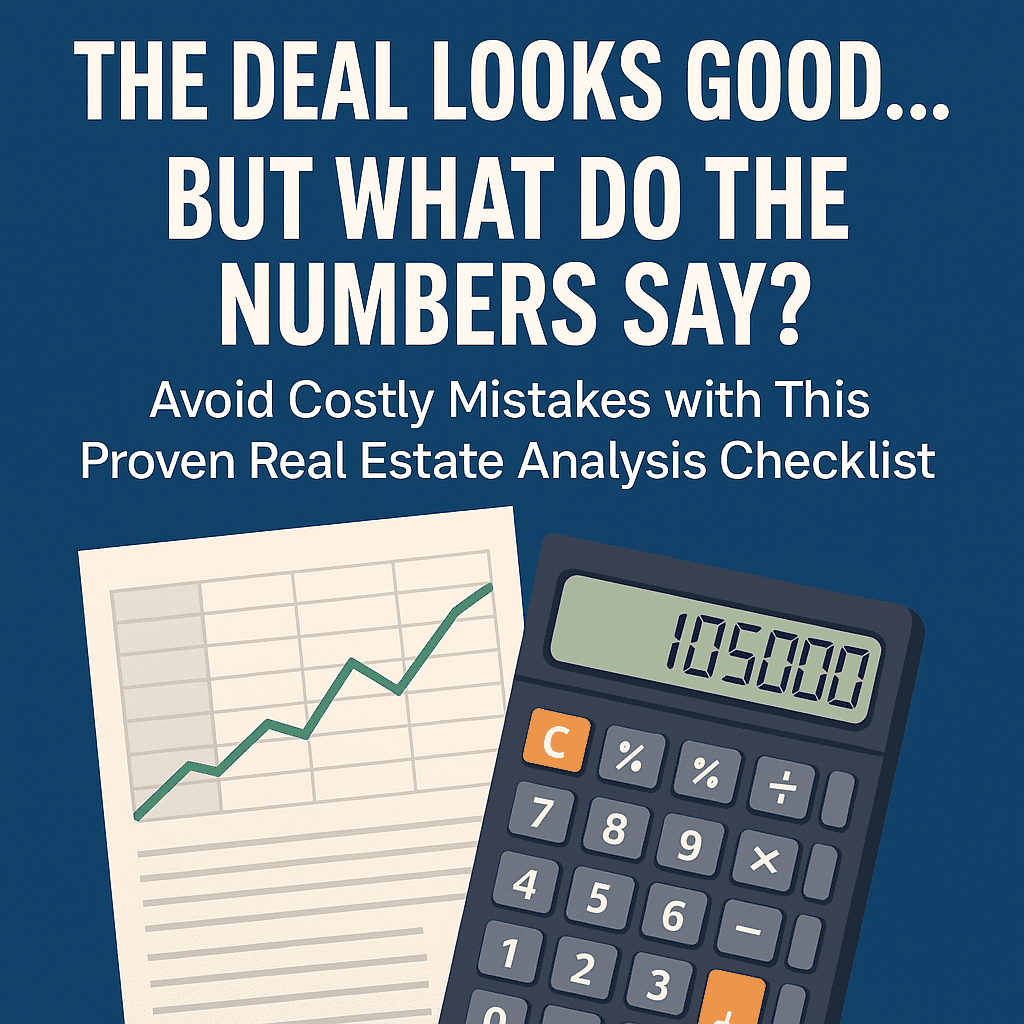
You’ve seen the listing. It’s in a “hot” area, the agent says it “won’t last,” and the rent roll looks appealing. But before you take out your pen, or even think about negotiating, there’s one essential question:
Do the numbers really work?
Recently, I had the pleasure of being a guest on a podcast hosted by Asa Moran, a real estate student at the University of Alabama. Asa is one of a growing wave of bright, motivated students who are preparing to make their mark in the commercial real estate world.
As some of you know, I’m a big believer in supporting the next generation of investors.
During the podcast, we covered a lot of ground, from cash flow fundamentals to the nuances of value-add strategies.